The decision to consider donor egg IVF is one of the most emotionally significant moments in a fertility journey. It involves letting go of something — the hope of a genetic connection — while simultaneously opening a door to something equally profound: the real possibility of becoming a parent. At Yellow IVF, we approach donor IVF with the respect and care this decision deserves. This guide is designed to give you clear, honest information so that if donor IVF becomes part of your path, you can approach it with confidence rather than fear.
Key Takeaways
- Donor IVF is a well-established, highly successful treatment: Because donor eggs typically come from younger women, success rates are among the highest in assisted reproduction.
- Several medical situations make donor IVF the recommended option: Very low AMH, premature ovarian insufficiency, recurrent IVF failure, and certain genetic conditions are the most common.
- The birth mother is biologically connected to the baby: The pregnancy, the uterine environment, and the nourishment provided throughout gestation are entirely yours.
- Indian law governs donor IVF carefully: Egg donation in India is legal and regulated under the ART (Regulation) Act, 2021.
When Is Donor IVF Recommended?
Donor IVF is typically recommended when the primary obstacle to conception is the quality or availability of the woman’s own eggs. The most common clinical situations include:
- Premature Ovarian Insufficiency (POI): When the ovaries stop functioning normally before the age of 40, producing very few or no eggs.
- Severely diminished ovarian reserve: A very low AMH level combined with a poor response to stimulation in previous cycles.
- Recurrent IVF failure: Multiple cycles with own eggs that have not resulted in a viable embryo or pregnancy, particularly when embryo quality has been consistently poor.
- Recurrent miscarriage due to egg quality: Where chromosomal analysis of miscarried tissue consistently points to egg-origin errors.
- Advanced maternal age: Women over 43 to 45 often find that donor eggs offer significantly better outcomes than own-egg IVF.
- Genetic conditions: Where the woman carries a serious hereditary condition and wishes to avoid passing it on, donor eggs may be chosen in combination with genetic testing.
- Ovarian removal: Women who have had one or both ovaries removed due to cancer, severe endometriosis, or other medical conditions.
How Does the Donor Egg Process Work in India?
Under the ART (Regulation) Act of 2021, egg donation in India is legal and regulated. Donors are anonymous — recipients do not have the right to know the donor’s identity, and vice versa. Donors must be between 23 and 35 years of age, have their own biological child, and must not donate eggs to more than one couple at a time. This framework exists to protect both donors and recipients.
The Process Step by Step:
- Donor screening: Egg donors undergo comprehensive medical, psychological, and genetic screening. Blood tests, AMH level, ultrasound, STI screening, and karyotype testing are all standard.
- Cycle synchronisation: The donor’s stimulation cycle is coordinated with the recipient’s uterine preparation. The recipient takes estrogen and progesterone to prepare the endometrial lining.
- Egg retrieval from the donor: The donor undergoes ovarian stimulation and egg retrieval in exactly the same way as a standard IVF patient.
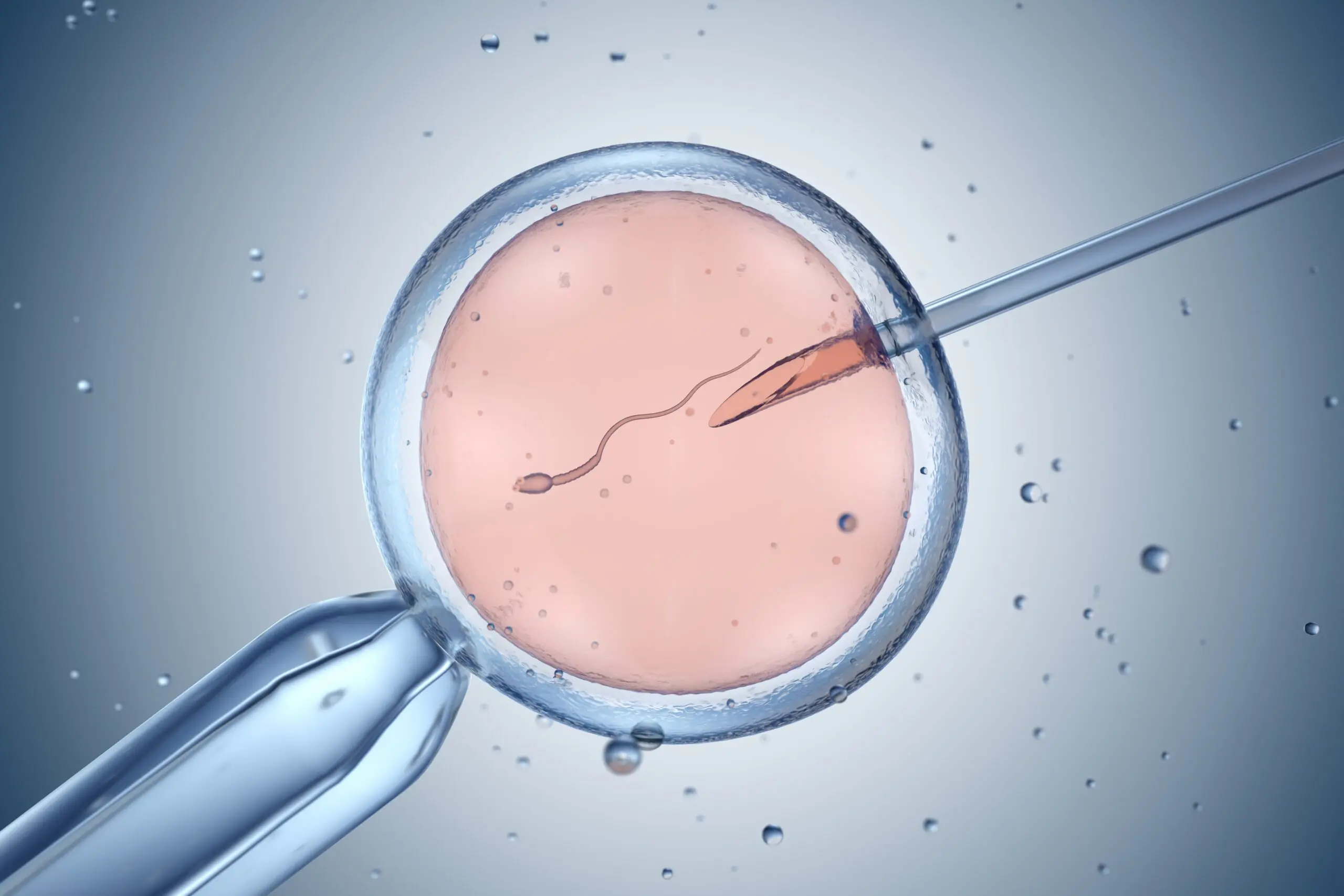
- Fertilisation: The retrieved eggs are fertilised with the recipient partner’s sperm (or donor sperm if required) in the embryology lab, using ICSI in most cases.
- Embryo transfer: One or two healthy embryos are transferred to the recipient’s uterus, typically at the blastocyst stage on day 5.
- Pregnancy test: A blood test 10 to 14 days after transfer confirms whether implantation has occurred.
What Are the Success Rates for Donor IVF?
Donor egg IVF has some of the highest success rates in assisted reproduction. Because the eggs come from young, thoroughly screened donors with proven ovarian function, embryo quality is typically high. Live birth rates per embryo transfer in donor IVF cycles range from 50 to 65 percent in well-run programmes — significantly higher than own-egg IVF in women over 40 or with poor ovarian reserve.
At Yellow IVF, our 86%+ clinical success rate reflects our commitment to rigorous embryo selection, individualised recipient preparation, and experienced embryology. Donor IVF is one of our strongest performing treatments.
“I was 42 with very low AMH. After two failed own-egg cycles, I decided to look at donor IVF. The hardest part was the decision. The actual process was smoother than I expected. Our son is now two years old and looks just like my husband.” — Anita, 44, Delhi.
The Emotional Journey of Choosing Donor IVF
We would be doing you a disservice if we did not acknowledge that this decision carries emotional weight. Many women need time to process the shift from own-egg IVF to donor eggs. Feelings of grief, guilt, fear about bonding, and concerns about what to tell family or the child are all completely natural and common.
What the evidence consistently shows is that the vast majority of women who pursue donor IVF report strong bonding with their child, a profound sense of motherhood, and no regret about the path they chose. The pregnancy — the physical experience of carrying and nurturing a life — is entirely the birth mother’s own.
At Yellow IVF, we offer dedicated counselling as part of the donor IVF process. We do not rush couples toward this decision, and we do not treat it as simply a next-step treatment option. We treat it as the significant, life-shaping choice that it is.
What About the Legal and Disclosure Questions?
Under Indian law, donor identity is anonymous. However, couples must decide for themselves how they wish to handle disclosure to family, friends, and, in time, the child. There is no legal obligation to disclose donor conception, but psychological research increasingly suggests that age-appropriate honesty with children about their conception story is associated with better outcomes for family wellbeing.
This is a deeply personal decision and one that counselling can help you think through carefully, without judgment.
| Who It Helps | Why Donor IVF Is Recommended |
|---|---|
| Women with premature ovarian insufficiency | Own eggs not available |
| Women with very low AMH | Poor response to stimulation |
| Women over 43–45 | Egg quality decline with age |
| Recurrent IVF failure (own eggs) | Consistently poor embryo quality |
| Genetic condition carriers | Avoiding hereditary disease transmission |
Conclusion: Donor IVF Is a Path to Parenthood, Not a Compromise
We want to be clear: choosing donor IVF is not giving up. It is choosing the most effective path available to you, informed by your medical reality and guided by your desire to become a parent. Thousands of families have been built this way — with love, intention, and the full partnership of the clinical team walking alongside them.
At Yellow IVF, we will ensure you understand every aspect of the process, that you feel supported in your decision, and that your treatment is planned and carried out with the excellence and compassion you deserve.
If you would like to explore whether donor IVF is the right path for you,
book a consultation with our specialists today. There is no pressure and no judgment — just clarity.